
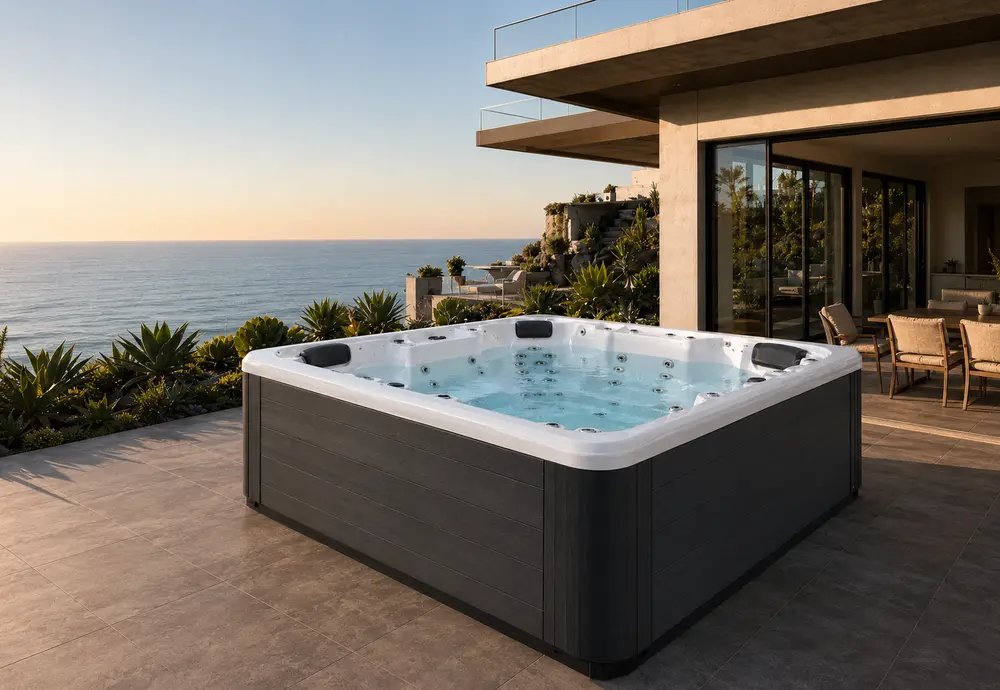
A showroom can make every spa feel exciting. A useful buying process slows the decision down just enough to separate features that will improve your routine from features that only look impressive on a specification sheet. Start with how you expect to use the spa, then narrow the field with comfort, site requirements and long-term ownership in mind.
Start with real life
Define who will use the spa and why.
Think about an ordinary week rather than a special occasion. A couple using the spa for evening relaxation may value a compact footprint and two excellent therapy seats. A household that entertains may need open seating, easy entry and more room to move. A taller user may need deeper seats, while a shorter user may feel more comfortable with shallower positions.
Write down the two or three outcomes that matter most—quiet time, muscle relief, family connection, entertaining or year-round outdoor use. Those priorities make later comparisons much easier.
- Typical number of users
- Preferred upright seats, lounge seats or a mix
- Height and mobility of the primary users
- How often the spa will realistically be used
- Whether conversation space or targeted hydrotherapy matters more
Comfort first
Test the seating, not just the water features.
Seat shape and depth matter as much as the number of jets. A lounge can feel secure for one person and overly buoyant for another. An upright seat can place jets perfectly on one body type and miss the target on another. Sit in the dry spa and, when available, arrange a wet test before making the final decision.
Move through every seat you expect to use. Check foot placement, head position, ease of entry and whether two people can sit comfortably without crowding each other.
The property
Match the model to the installation site.
Confirm the outside dimensions, filled operating weight, equipment location and cover clearance before committing to a model. The selected spa affects the foundation, electrical plan, delivery route and service access.
Measure the narrowest gate, tightest turn and lowest overhead clearance from the street to the final location. Leave room for steps, a cover lifter and future equipment service. If the site is constrained, compare models with the delivery team before ordering.
- Exact footprint and orientation
- Foundation and drainage plan
- Electrical voltage and amperage
- Equipment-side service clearance
- Cover opening direction and steps
- Gate, side-yard and overhead delivery clearance
Ownership
Compare the systems you will live with.
Ask how filtration, sanitation, controls, insulation and the cover are designed to work together. The simplest system is not always the cheapest, and the most complex system is not always the easiest to maintain. Look for clear owner instructions, accessible filters and controls that make sense to the people who will actually use them.
Review the written warranty rather than relying on a verbal summary. Compare what is covered, for how long, what is excluded and who coordinates support locally.
- Filter type, quantity and replacement access
- Water-care options and ongoing supplies
- Cabinet and equipment access
- Insulation and cover construction
- Controls, lighting and optional accessories
- Written warranty and local support process
Final comparison
Reduce the decision to two or three models.
Once the site and seating preferences are clear, compare a short list side by side. Ask for complete model specifications and an itemized quote that identifies the spa, delivery assumptions, cover, steps, accessories and any site work that is not included.
A good final choice should be comfortable, workable for the property and easy to understand. If the decision still depends on a long list of features you do not expect to use, return to the original goals and simplify.
Common questions
How to choose the right hot tub FAQs
How many hot tub seats do I need?
Choose for the number of people who will use the spa regularly, then add capacity only when entertaining is genuinely important. Seat shape and usable foot space can matter more than the advertised seat count.
Is a lounge seat better than all upright seating?
It depends on body type and use. Lounges can provide full-body support but may reduce open conversation space, and some users float out of them. Sit in both layouts before choosing.
Should I buy a 120V or 240V hot tub?
The right connection depends on the model, performance expectations, property and electrical capacity. Compare the exact manufacturer requirements and have a qualified electrician evaluate the site before electrical work begins.
Use this guide as a starting point
Every model, property and household is different. Confirm product specifications with the current manufacturer materials and address-specific installation requirements with the governing public agencies and appropriately licensed or qualified professionals.